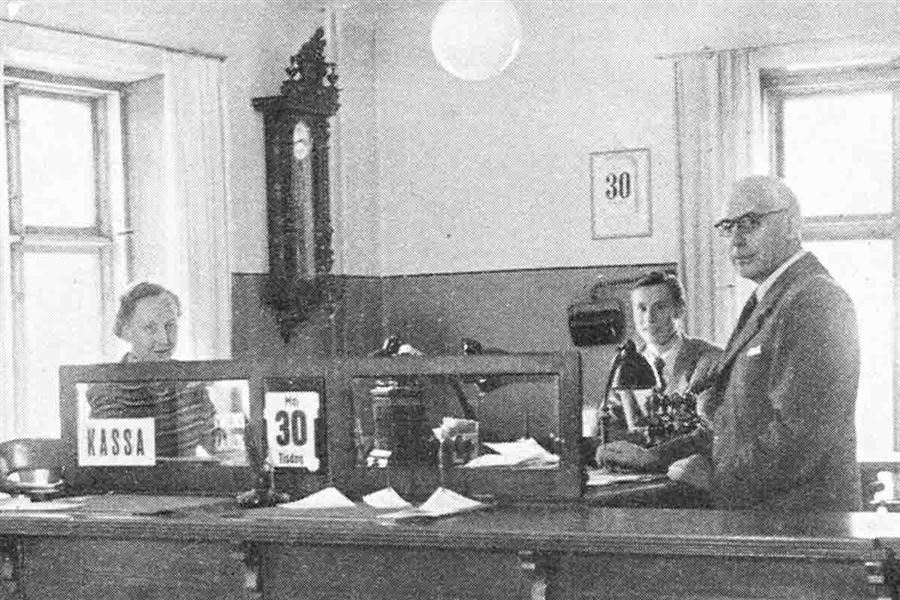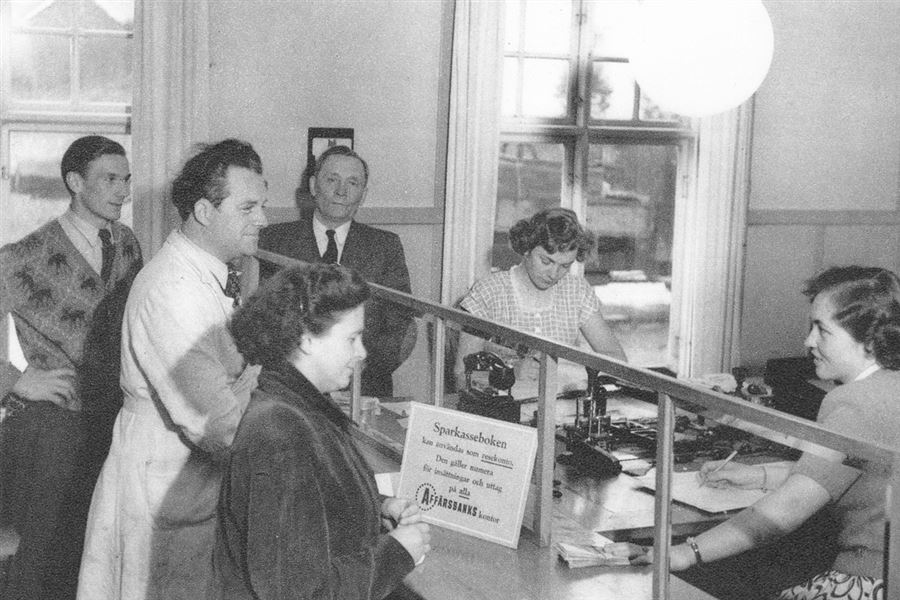
The 1950s was a decade of urbanisation, housing construction and a growing service sector. The branches are part of this social expansion, with the Bank establishing itself in new suburbs and becoming a natural part of its customers’ daily lives. Advisory services cover everything from customers’ first savings accounts to mortgages and corporate services.
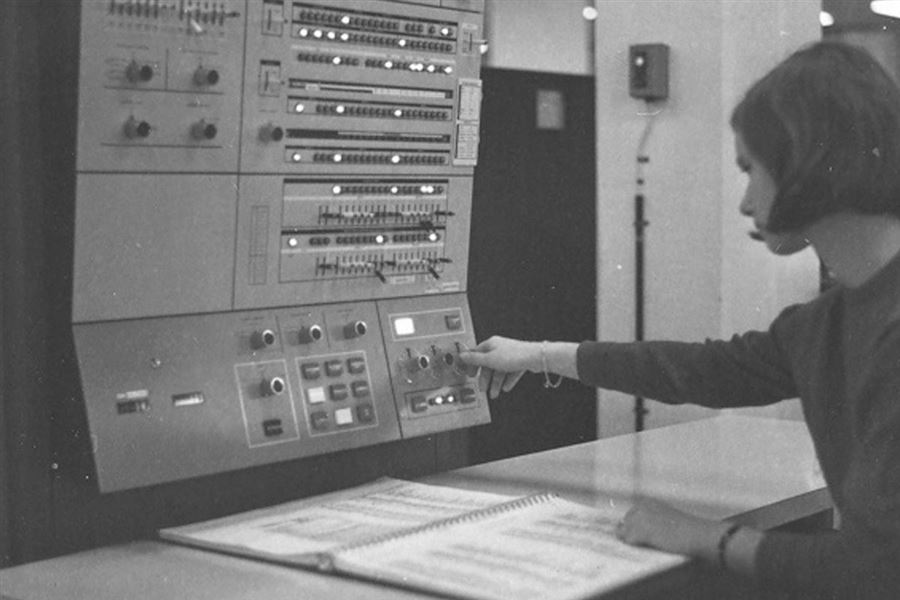
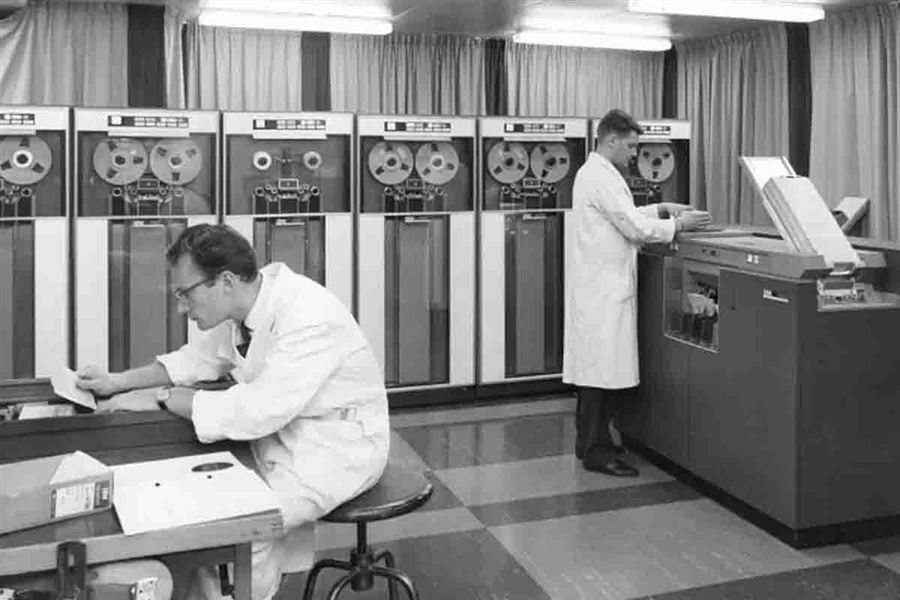
Computer technology makes its debut in a supporting role – not as a replacement
The Bank is excited about the possibilities of new technology and introduces it into its business operations. It is an early adopter of computers, using them for a specific purpose – to improve precision, reduce human error and free up more time for meetings with customers. The machines do not replace human judgement, but rather support it. The combination of modern technology and personal responsibility keep risks at a reasonable level and help make answers clear and quick.
For companies, financing is often needed for machinery, inventories and transport. The branches weigh up investments against cash flows and seasons, and adjust credits as necessary. Households want stable forms of saving and no hidden terms and conditions. In both cases, the key factors are simplicity, comprehensibility and a long-term approach.
Expectations around service growing
As consumption rises, so do expectations regarding service. The Bank’s response to these expectations comes in the form of its local presence. Being where the customers are and making decisions where the greatest knowledge of the customers is found creates close, long-lasting banking relationships that can weather economic ups and downs alike.