When the Swedish banking and property crisis hits in the early 1990s, many banks are forced to take bailouts. Handelsbanken chooses to take another path. The Bank bolsters its own funds through internal initiatives, and its operations are maintained with no taxpayer support.
The focus is on keeping everyday banking services working. Payments, wages, financing for viable companies must be functional. The self-sufficient line is a winner among customers and employees alike. The crisis serves to confirm that the Bank’s culture and way of working, with local credit assessments, low risks and strong cost awareness are crucial to stability and corporate social responsibility.
Stable foundation in an unstable market
The crisis is a testing time for the entire financial sector. Property prices tumble, credit losses creep upwards and the funding markets are in a precarious position. Handelsbanken’s response is to quickly strengthen its own funds and to continue running the Bank according to clear, specific principles. Again, the Bank’s proven business model gives it the self-confidence to go its own way, a choice which would end up bringing unparalleled success.
Given how close it is to the customer, the Bank can understand cash flows, rental levels and order books, and adapt its solutions accordingly. At the same time, the Bank keeps a keen eye on its costs, safeguarding profitability and the long-term future.
Its strong balance sheet not only means that the Bank can withstand the pressures without state support, but that it is actually able to contribute to the overall stability of the whole financial system. On numerous occasions, surplus liquidity is placed with the Riksbank. In practice, this means that the Riksbank loans capital from Handelsbanken – clear evidence of the Bank’s solid finances and shouldering of responsibility beyond its own business operations.
New channels – same culture
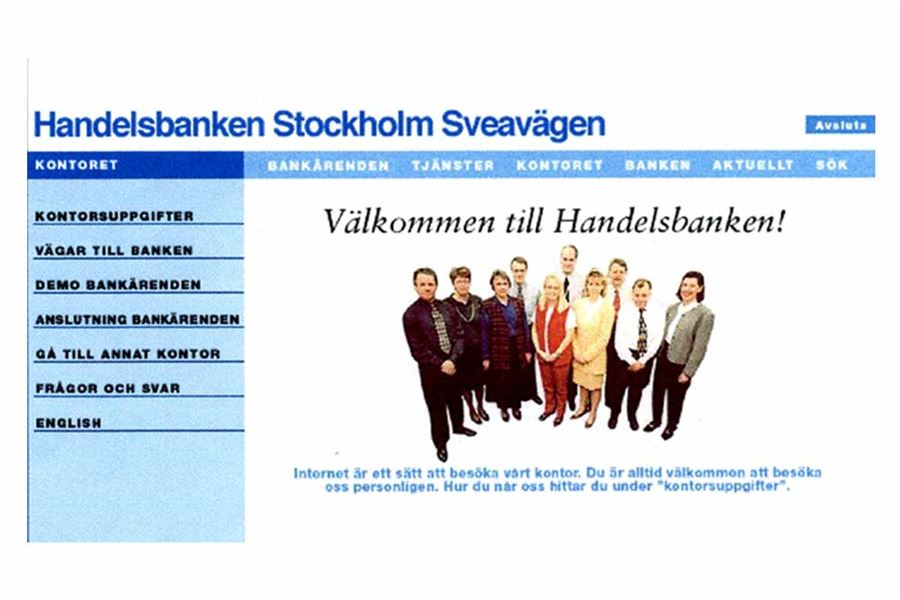
Once the crisis abates, normal service is resumed. Towards the end of the decade an early version of online banking is introduced, supplementing the branches and telephone services. Customers can choose their meeting place according to their needs, but are always met by the same bank.
The period provides further proof of the value of independence and local responsibility. By standing on its own two feet during trying times, the Bank boosts confidence in its operations – among customers, employees and investors alike.