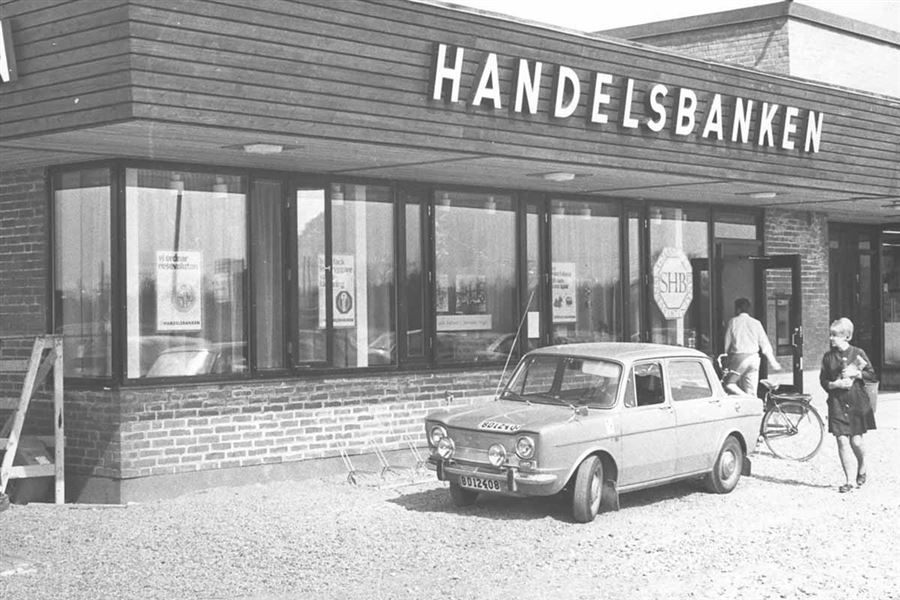
During this period, Sweden underwent rapid modernisation and extensive housing development. Handelsbanken responded to these developments by decentralising the Bank’s business model, creating shorter decision-making pathways and greater local responsibility.
The Million Programme public housing project requires tight organisation and faultless methodologies. The regional banks provide the structure, but it is the local branches’ mandates that ensure high quality at the more detailed level. With decisions made close to the customer, the Bank is able to factor in local conditions such as rental prices, land prices, available labour and infrastructure when assessing credits.
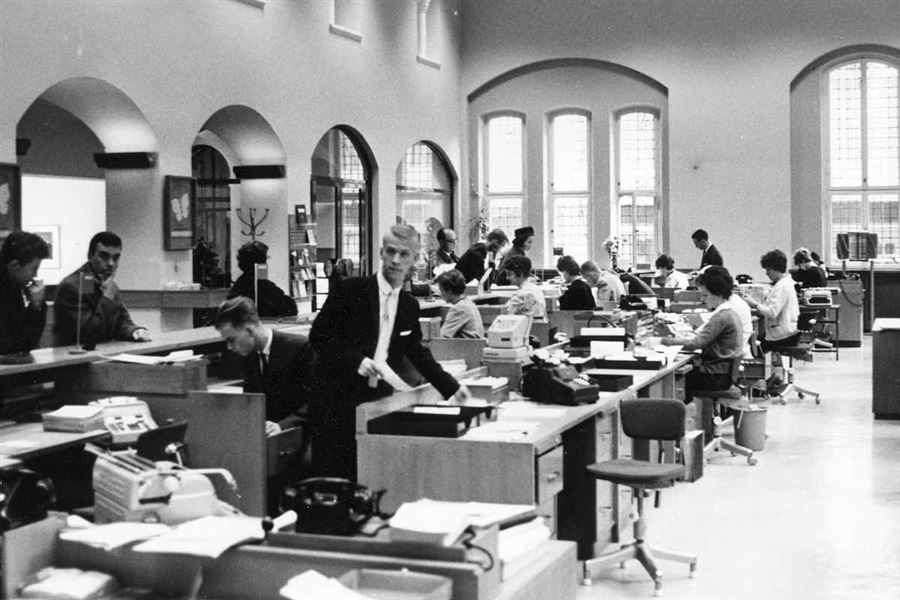
Modernisation, gender equality and Oktogonen
The 1960s marked a breakthrough for women in leadership positions within the bank. Lisa Arnell at the Lidingö-Näset branch is, in 1962, the first woman to be appointed Branch Manager at the Bank. A few years later in 1968, Gunnel Winroth becomnes head of the notary department and thus the first woman promoted to a directorship at Handelsbanken.
At the same time, processes and follow-up are modernised in line with the Bank’s decentralised business model, whereby freedom is combined with responsibility. 1973 sees the introduction of the Oktogonen profit-sharing scheme – a unique model. A portion of the Bank’s surplus is transferred to a separate shared foundation for all employees, on the condition that Handelsbanken has a higher profitability than peer banks. The objective is to generate long-term engagement, cost awareness and customer focus. Over time, Oktogonen becomes a central component of Handelsbanken’s culture and success.
A Bank changing alongside the times
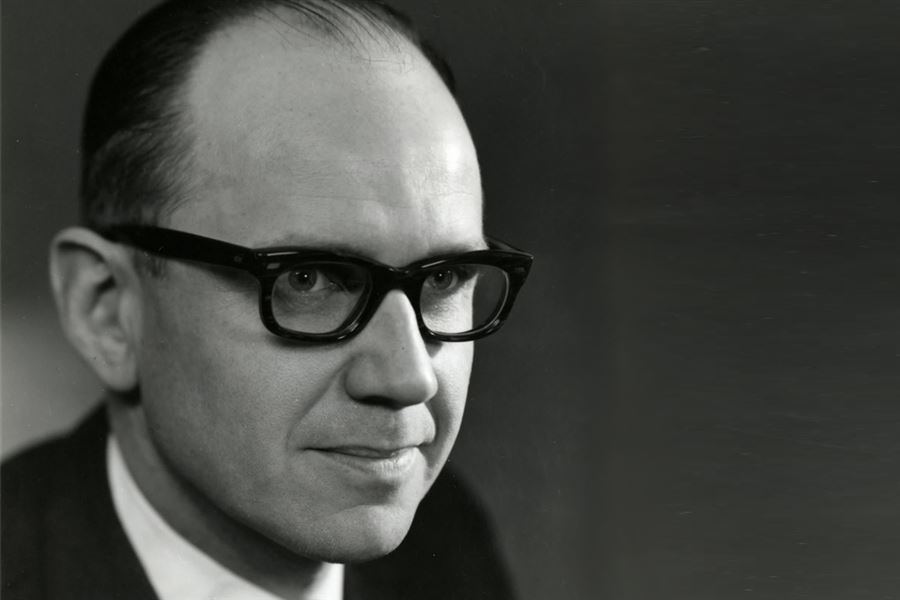
Handelsbanken’s corporate goal was formulated during Jan Wallander’s time as Chief Executive Officer. This is a period when the Bank transitions to a modern listed company with a clear profitability goal – higher profitability than the average of peer banks. The goal is to be achieved by having more satisfied customers and lower costs than the competition.
When the oil crisis disrupts the economy, it proves a test of the Bank’s discipline. Low risk levels, careful lending and prudent cost control mean that the Bank can continue to support viable businesses without being drawn into short-term fluctuations. The model is not dependent on economic prosperity but on everyday valuations; something which is noticeable in customer meetings thanks to clear, quick decisions and long-term relationships. For households and companies, this provides significant reassurance. They know the Bank will be there, regardless of the economic situation, making decisions that prevail over time.