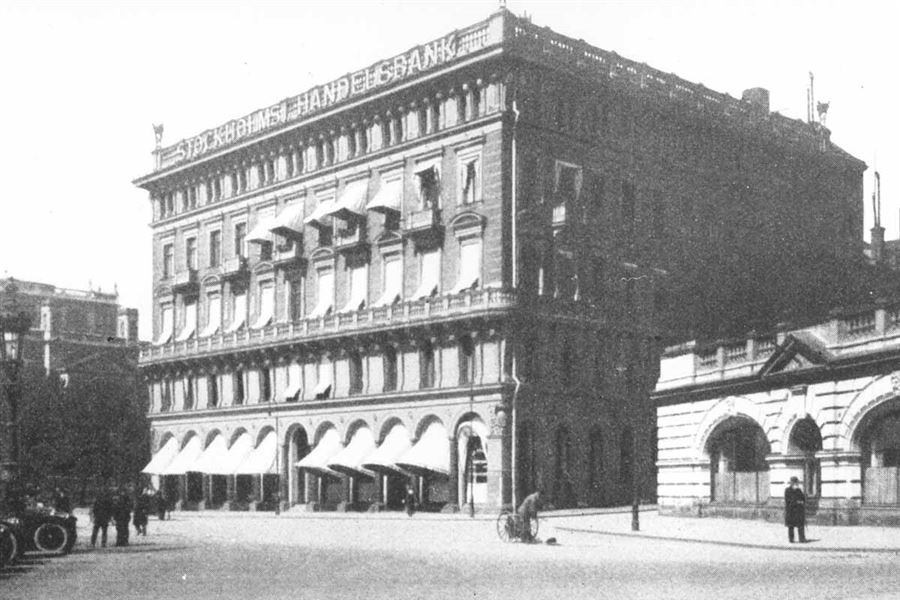
The Bank made major progress during the 1890s. FX and bond business grew – not from speculation, but rather as services for companies in need of secure payments and long-term capital. When Louis Frænckel joins Handelsbanken’s upper echelons, the Bank’s business in general remains unchanged, but is now supplemented with international experience. Robust finances, healthy credits and respect for each individual’s specific needs.
At the same time, household savings become more clearly structured, and the banking book develops into an important tool for many families. The banking book will remain a stalwart of the Bank’s product range for over one hundred years.
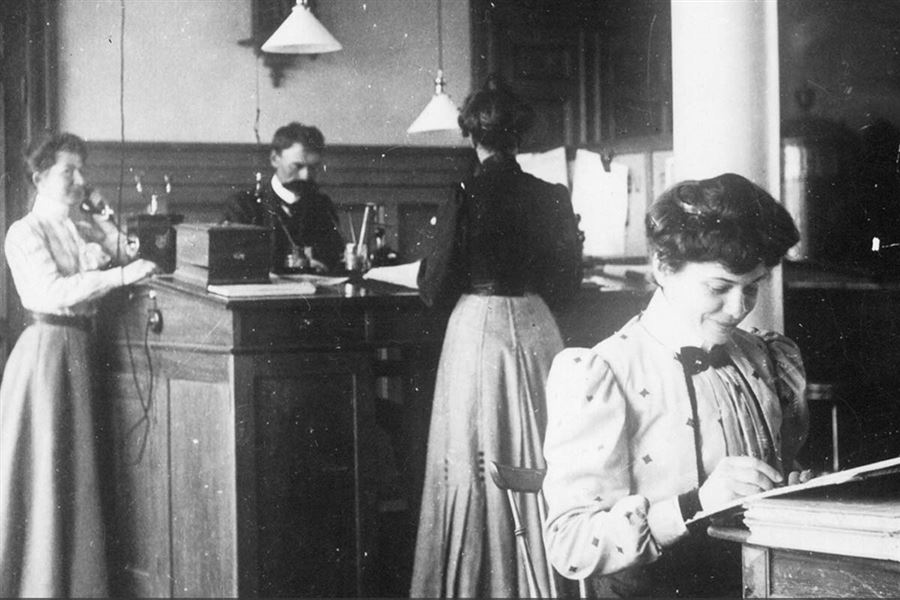
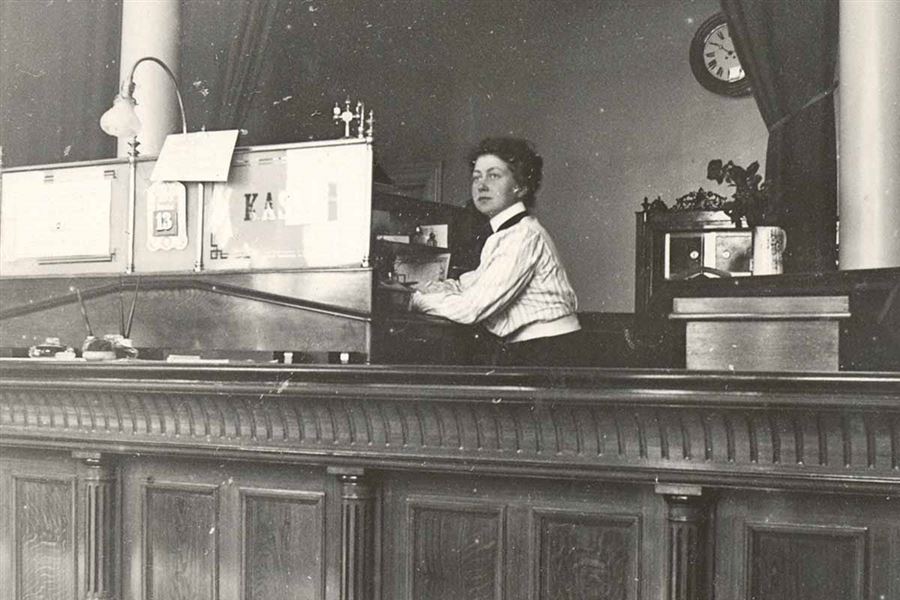
An important milestone is reached in 1878 when Hulda Engström becomes the Bank’s first female employee. This marks the first step of a journey in which women gradually take on more and more roles within the Bank and, eventually, make their way into senior positions.
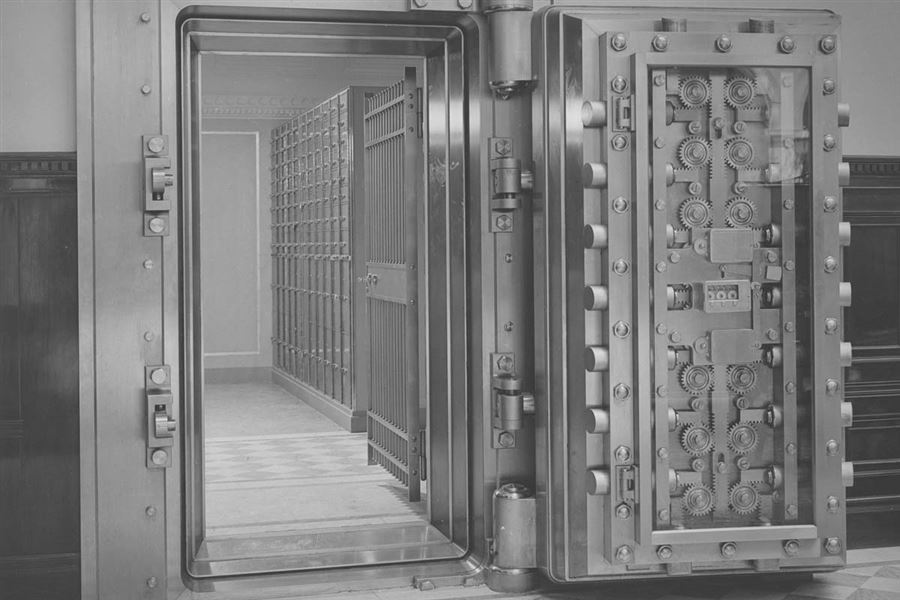
Stability and security during times of change
The early 1900s see numerous technological innovations and growing export volumes. For the Bank, this entails more international payments, more demand for foreign exchange services and a more highly developed bond market. The branches serve as intermediaries between the global economy and the companies’ day-to-day operations. They explain the terms of international business, secure payment flows and ensure risks are managed before they turn into problems.
The outbreak of World War I in 1914 changes circumstances dramatically. Imports are made much more difficult, shipping is cut significantly and planning becomes more short term in nature. The Bank tows its tried-and-tested line – good liquidity, carefully considered risks and close dialogue with customers.
At the same time, daily life continues – wages need to be paid, savings managed and necessary credits assessed. It is a testing time for many households.
Local knowledge during a time of uncertainty
In many towns and villages, the bank branch serves as a beacon of stability amidst all the turbulence. The Bank helps both companies and households to manage rationing, adjust their purchases and keep payments flowing. Local knowledge of supply chains, raw materials and transport is critical, and provides enormous relief and reassurance when so many other aspects of day-to-day life are impossible to predict.
As peace edges closer, the Bank holds the same core values as ever – healthy credits, being close to the customer and an understanding of customers’ unique circumstances. The experience of the war years serves only to further reinforce the Bank’s conviction that long-term relationships and prudence during more prosperous times vastly improve the Bank’s options ans ability to adapt whenever there are sudden changes in the business environment.